
Why Willpower Fails in a Long Job Search (And What Actually Works Instead)
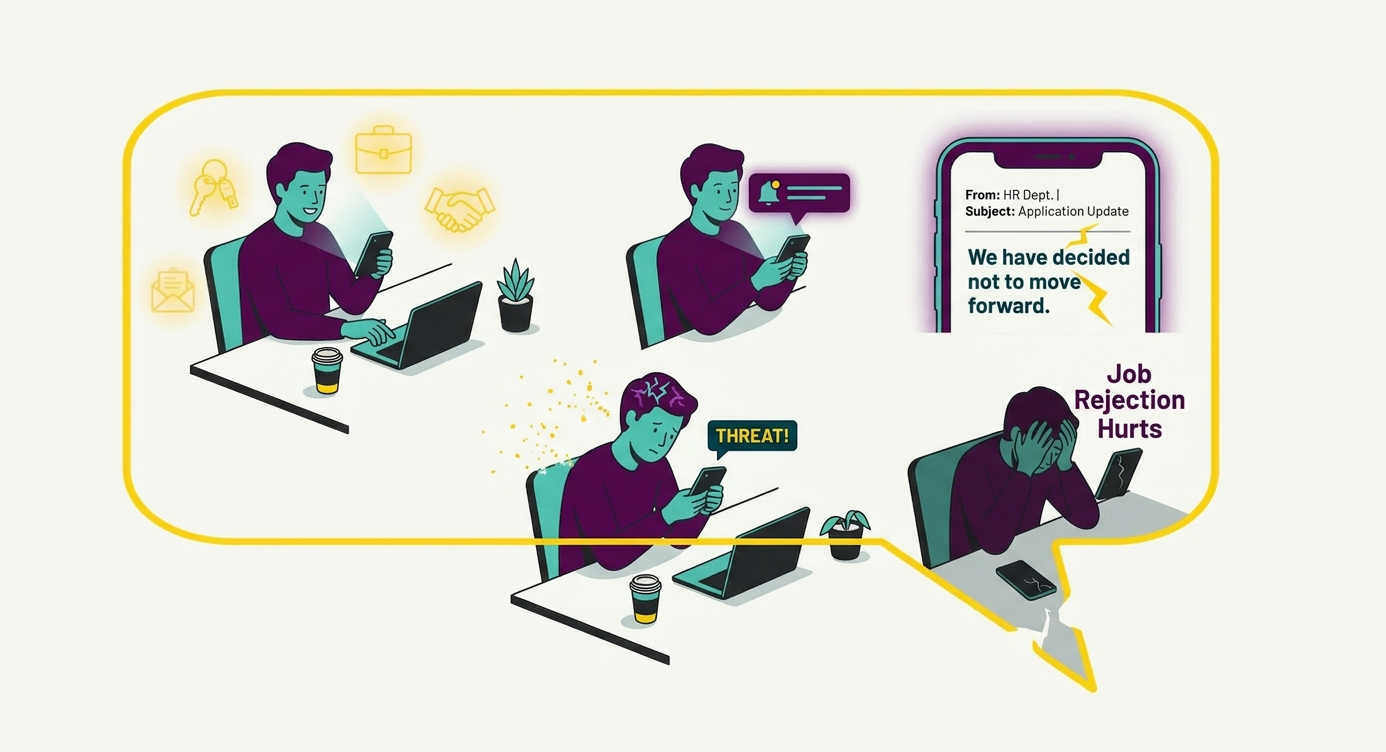
You started the search with real motivation. You made a plan, set weekly goals, promised yourself you’d treat it like a job. Then week six hit. The applications got less tailored. The follow-up emails stopped. The energy that felt so reliable in the beginning disappeared — and with it, the structure you’d carefully built.
Most people blame themselves for this. They tell themselves they’re not disciplined enough, not trying hard enough, not built for the grind. But the research tells a completely different story.
Willpower Is a Resource, Not a Character Trait
In a landmark 1998 paper, Roy Baumeister and colleagues at Case Western Reserve University demonstrated something that has reshaped how psychologists think about self-control: the capacity for willpower operates like a limited fuel supply. Use it heavily in the morning — making decisions, resisting distractions, pushing through reluctance — and you have less of it available in the afternoon. This phenomenon, known as ego depletion, helps explain why the person who was so focused at 9am is scrolling social media at 3pm.
A job search is an unusually punishing environment for willpower. Every single session demands decisions: Is this role worth pursuing? How much should I customize this cover letter? Should I follow up now or wait another week? Do I reach out cold or find a warm connection? Multiply those decisions across weeks and months, and you’re not just tired — you’re systematically depleting the resource you’re depending on most.
What feels like laziness or lack of discipline is often just a depleted resource trying to recover. The problem isn’t you. The problem is the strategy.
The Hidden Cost of Decision Fatigue
There’s a specific version of willpower depletion that job seekers rarely talk about: decision fatigue. The more decisions you make in a given period, the worse the quality of subsequent decisions becomes. Judges grant fewer paroles late in the day. Shoppers make poorer purchasing choices after long browsing sessions. And job seekers submit increasingly generic applications as a session drags on.
This isn’t a minor inefficiency. It means that the six-hour application marathon you powered through on Sunday produced dramatically worse work in hours four, five, and six than it did in hours one and two. The effort was real. But the output wasn’t. And the depleted state you finished in made it harder to come back the next day.
The solution isn’t to try harder. It’s to stop depending on willpower in the first place.
What Habits Actually Do (That Willpower Can’t)
When a behavior becomes a genuine habit — something triggered automatically by a cue rather than requiring a conscious choice — it bypasses the willpower system almost entirely. You don’t decide to brush your teeth every morning. The cue (waking up, walking into the bathroom) fires, and the behavior follows without deliberation.
Wendy Wood, a behavioral scientist at USC who has spent decades studying habit formation, has found that roughly 43 percent of daily behaviors are performed out of habit rather than deliberate choice. That’s not a small slice of life. It’s nearly half of everything you do, running quietly in the background, requiring no motivation to execute.
The goal for a long job search isn’t to manufacture motivation on demand. It’s to build a small set of habits that keep the search moving forward whether motivation shows up or not.
The Planning Trick That Makes New Habits Stick
One of the most replicated findings in behavioral psychology is surprisingly simple: people who plan specifically when, where, and how they will do something are far more likely to actually do it.
This strategy is called an implementation intention, and it was developed by psychologist Peter Gollwitzer at New York University. In his foundational 1999 research, Gollwitzer found that people who formed if-then plans (“If it is Monday at 9am and I’ve had coffee, then I will sit at my desk and spend 90 minutes on job search tasks”) were two to three times more likely to follow through than people who simply intended to complete the same task.
The mechanism is the same one that makes habits work: you’re offloading the decision from the conscious, willpower-dependent part of your brain onto a cue-triggered response. You’re not deciding to do the task. You’ve already decided. The cue makes the decision for you.
How to Build a Job Search Habit That Doesn’t Need You to Feel Like It
The structure of a durable job search habit has three elements: an anchor, a boundary, and a ritual.
The anchor is an existing behavior you already do reliably — morning coffee, the first fifteen minutes after lunch, the time after you drop the kids off. You’re attaching the new job search habit to something that already happens automatically, so the existing habit pulls the new one along with it.
The boundary is the hard stop. You decide in advance how long the session will last — sixty minutes, ninety minutes, two hours — and you stop when the timer ends, regardless of how much you’ve accomplished. This is the single change that most reliably prevents burnout and makes the habit easier to start the next day. Ending on time preserves energy. Ending on energy preserves willingness.
The ritual is what you do at the end of each session that isn’t the job search. A short walk. Making lunch. A specific playlist. The ritual signals to your brain that the search block is complete and something else is beginning. This transition matters more than most people realize — it’s what makes the search feel contained instead of consuming.
When the Habit Breaks Down
Habits break. Life interrupts. A bad week of rejections, a family situation, an illness — any of these can knock the rhythm loose. When that happens, the most important thing isn’t to restart perfectly. It’s to restart quickly.
Research on habit resilience consistently shows that missing once doesn’t matter. Missing twice starts to erode the pattern. The goal isn’t never to miss — it’s to treat a single miss as noise and get back to the anchor the next day.
A brief prompt or reminder at the right moment can be surprisingly effective here. Not a notification that demands something from you, but a small nudge that reconnects you to the intention — a reminder that the habit exists and that starting again is simpler than it feels in the moment of avoidance.
✨ The goal isn’t to want it more. The goal is to make it automatic.
Willpower is not the engine of a long job search. Habits are. The people who navigate an extended search without losing themselves aren’t more motivated than you — they’ve just built a structure that doesn’t depend on motivation to run.
Stop trying to want it more. Start making it harder to skip.
Questions People Ask About Job Search Habits and Willpower
Not entirely — there will always be decisions to make. But you can make the act of showing up to the search automatic. When the trigger fires and the habit runs, you’ve already done the hardest part: starting. The work inside the session still requires attention, but you’ve removed the daily decision of whether to do it at all.
Research suggests habit formation takes anywhere from three weeks to several months depending on the behavior and the person. For most job seekers, a consistent anchor-based routine starts to feel natural within three to four weeks of daily practice. The key is keeping the behavior small enough to do even on hard days.
Variable schedules make habit formation harder but not impossible. The key is finding an anchor that’s consistent even when other things shift — something like “right after I make coffee” works better than “at 9am” when your mornings aren’t predictable. Anchor to the behavior, not the clock.
It’s real and well-documented. Studies consistently show that the quality of decisions degrades as the number of decisions increases within a given period. The implication for job seekers is practical: do your most cognitively demanding search work early in the day and keep individual sessions short enough to maintain quality throughout.
Discipline is a willpower-based strategy — you’re using mental effort to override the desire not to do something. Habits are automaticity-based — the behavior runs without requiring that override. Discipline is useful in the short term. Habits are what sustain you over a search that lasts months.
Motivation fades. Habits don’t have to.
Hireground sends short, well-timed texts that keep your job search habit anchored — even when willpower runs out. Built on the science of behavioral nudges and habit formation.
Try Hireground Free → No spam. Cancel any time.Spark Micro Messages is a personal development and encouragement service. It is not therapy, counseling, or crisis support. If you’re experiencing a mental health challenge, please reach out to a qualified professional.