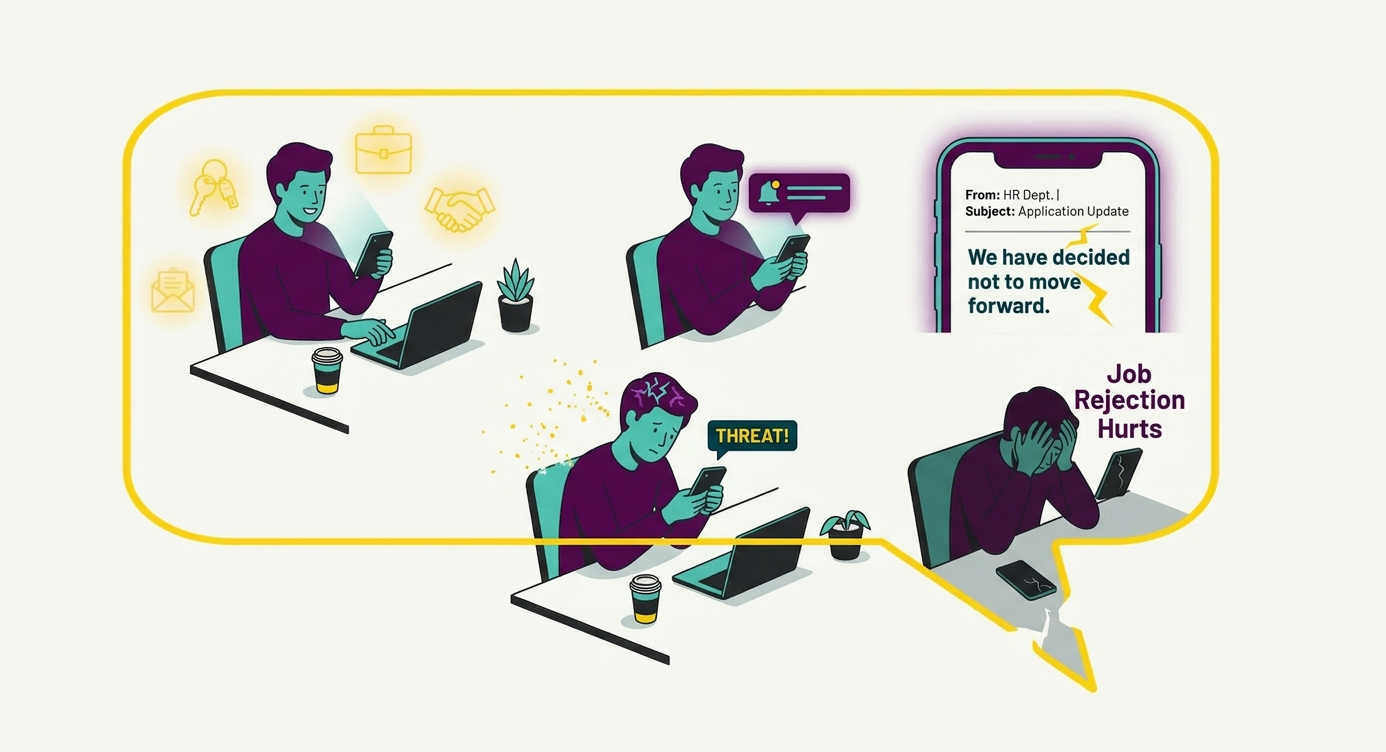

What 6 Months of Job Searching Taught Me About Resilience
Six months is a long time to be in the middle of something.
It’s long enough for the initial optimism to wear off. Long enough for well-meaning friends to stop asking how the search is going. Long enough for self-doubt to stop whispering and start speaking at full volume.
I was there. And what I learned in those six months had almost nothing to do with resumes, interview techniques, or networking strategies. It had to do with something bigger — something I didn’t expect the job search to teach me at all.
It taught me what resilience actually looks like. Not the motivational poster version. The real kind.
Month One: Confidence Disguised as a Plan
The first month felt manageable. I had a plan. Updated resume. Polished LinkedIn. AI tools at the ready. Optimized resumes. Optimized resumes. More optimized resumes. A spreadsheet tracking every application for a little while, because ORDER OUT OF CHAOS. (It felt like control.)
I sent applications confidently. I followed up diligently. I genuinely believed this would be over quickly.
Looking back, that confidence was useful — but it was also fragile. It was built on the assumption that effort would produce results on a predictable timeline. When the timeline didn’t cooperate, the confidence didn’t hold.
Month Two: The Silence
Month two was when the silence started growing louder. Applications disappeared into the void. Emails went unanswered. Roles I was excited about went dark.
The silence was harder than any rejection. Rejection at least tells you something happened. Silence tells you nothing — and nothing is the worst thing for a brain that wants answers.
This is where the emotional weight of a job search started to settle in. Not dramatically. Just gradually. A little less energy each morning. A little more effort to start the day.
Month Three: The Comparison Trap
By month three, I was deep in comparison mode. Every LinkedIn announcement of someone else landing a new role felt like a personal commentary on my search. But more importantly, it was a personal commentary on ME. My self-worth. I knew it was irrational. I couldn’t stop it.
The comparison trap is vicious because it only works in one direction. You compare your worst moments to someone else’s best announcement. You see their outcome and assume a smooth path. You never see the months of silence and self-doubt that preceded their good news.
This was when I started learning that protecting self-worth during a long search isn’t a soft skill. It’s a survival skill. If you let the search define your value, the search will break you.
Month Four: Letting Go of the Timeline
Something shifted in month four. Not because things got better — they didn’t, not yet. But because I stopped expecting them to follow my schedule.
I realized I’d been carrying two separate burdens: the actual difficulty of the search, and the weight of my own expectations about how quickly it should have been resolved. The second burden was heavier than the first sometimes.
When I let go of the timeline — when I stopped counting weeks and started focusing on showing up each day — the whole thing got lighter. Not easy. Lighter.
This is where consistency started to matter more than intensity. I stopped trying to power through with massive application days and started building a rhythm I could actually sustain. Ninety minutes a day. Quality over volume. Recovery built into the plan.
It wasn’t glamorous. But it was sustainable. And sustainable turned out to be the thing that mattered most.
Small wins don’t announce themselves. They accumulate quietly, behind the scenes, and then surface when you least expect them.
Month Six: Resilience Is Not What I Thought
By the time month six arrived, I’d learned something I didn’t expect.
Resilience isn’t about being tough. It’s not about powering through or ignoring how you feel or pretending the search doesn’t affect you. Resilience is the ability to feel the full weight of a difficult season and keep moving anyway. Part of my emotional journey was allowing myself to feel the feelings. Acknowledge them. And then keep moving anyway.
It’s deciding to send one more application when you don’t feel like it. It’s taking a day off without guilt because you know you need it. It’s being honest about how hard this is without letting that honesty become a reason to stop.
Resilience, it turns out, is built in the daily choices. Not in the dramatic moments. Not in the breakthroughs. In the quiet, unglamorous decisions to keep going when there’s no visible evidence that it’s working.
✨ The search took longer than expected. It also taught me more than I expected.
You’re not alone in this search.
Thousands of job seekers use Hireground to stay encouraged, focused, and moving forward — one message at a time. Join them.
Join Hireground → No spam. Cancel any time.What I’d Tell Someone at Month One
If I could go back and talk to myself at the beginning of the search, here’s what I’d say.
The timeline is going to be wrong. Let it go. The plan is going to need adjusting. That’s fine. The silence is going to feel personal. It isn’t. Some days will feel like you’re making zero progress. Those days still count.
And the thing that’s going to get you through isn’t a better resume or a smarter strategy. It’s the willingness to keep showing up — to stay in the search long enough for the right door to open.
The search ended. It always does. And when it did, the thing I was most grateful for wasn’t the job itself. It was discovering that I could carry something heavy for a long time and still keep walking.
That’s resilience. And it’s yours to build, no matter what month you’re in.
Questions People Ask About Long Job Searches and Resilience
More common than most people think. Depending on your industry, role level, and market conditions, searches of four to eight months are not unusual. The length of your search doesn’t reflect your talent or readiness.
Focus on what you can control daily, not on outcomes. Build a sustainable routine instead of relying on bursts of effort. And keep doing things outside the search that remind you who you are beyond your job title.
Take a break — a real one, without guilt. Then come back with a smaller, more manageable plan. Most people who feel like giving up are burned out, not out of options. The fix is usually pace, not more effort.
No. Resilience means feeling the full weight of the difficulty and continuing anyway. It’s not the absence of frustration — it’s the refusal to let frustration become the final answer.
Your sense of self. The search will test your confidence, your patience, and your identity. Protecting how you see yourself — keeping your worth separate from your employment status — is the single most important thing you can do.
Research on ecological momentary interventions suggests that small, well-timed nudges can interrupt negative thought patterns and help people maintain forward momentum during extended difficult periods. It’s not about false positivity — it’s about getting the right perspective shift at the right moment.
Spark Micro Messages is a personal development and encouragement service. It is not therapy, counseling, or crisis support. If you’re experiencing a mental health challenge, please reach out to a qualified professional.